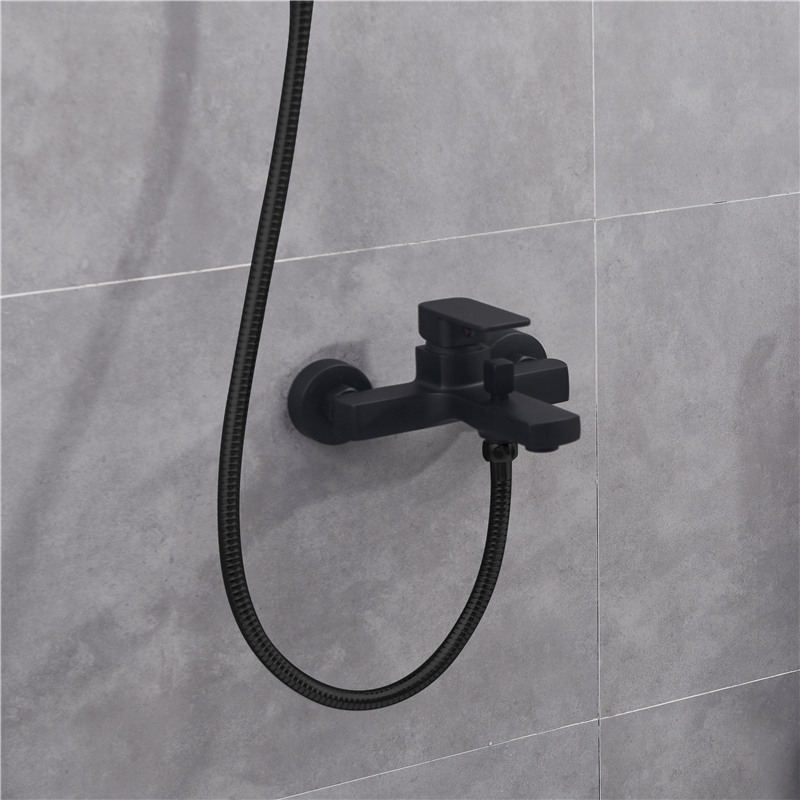
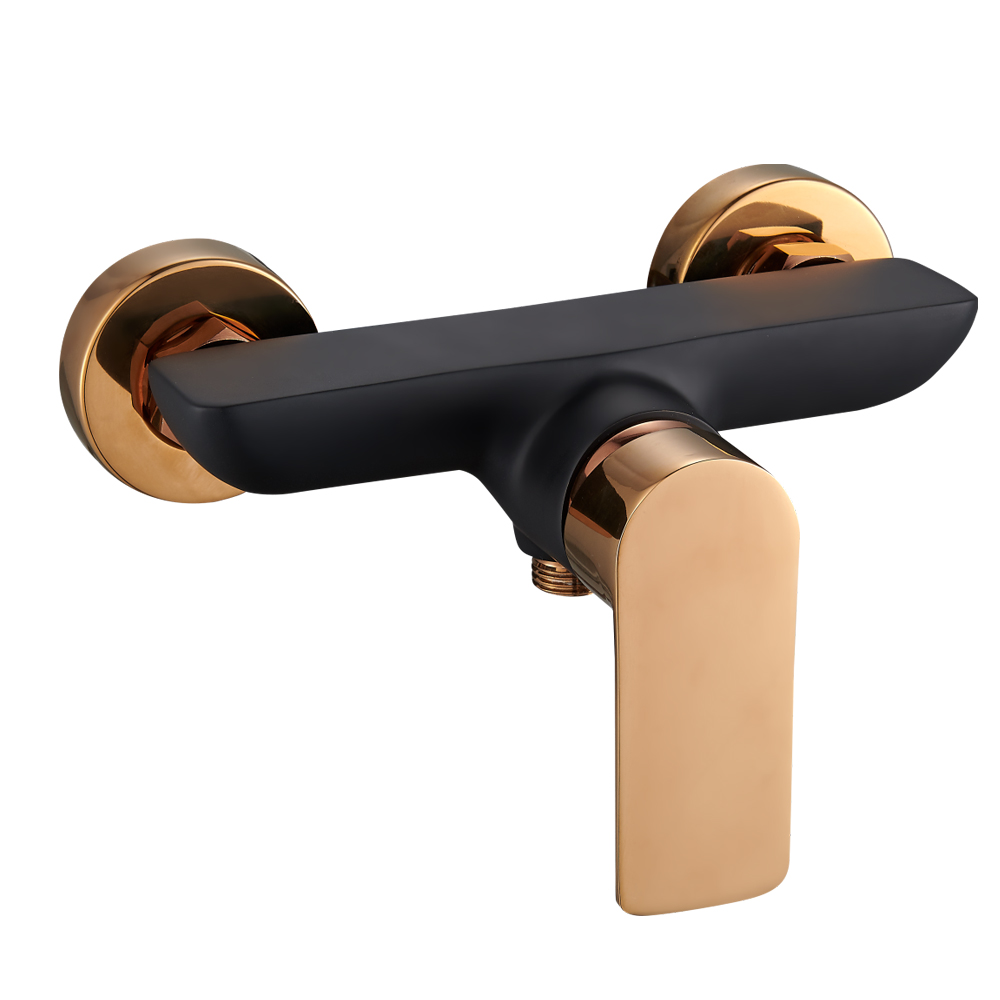
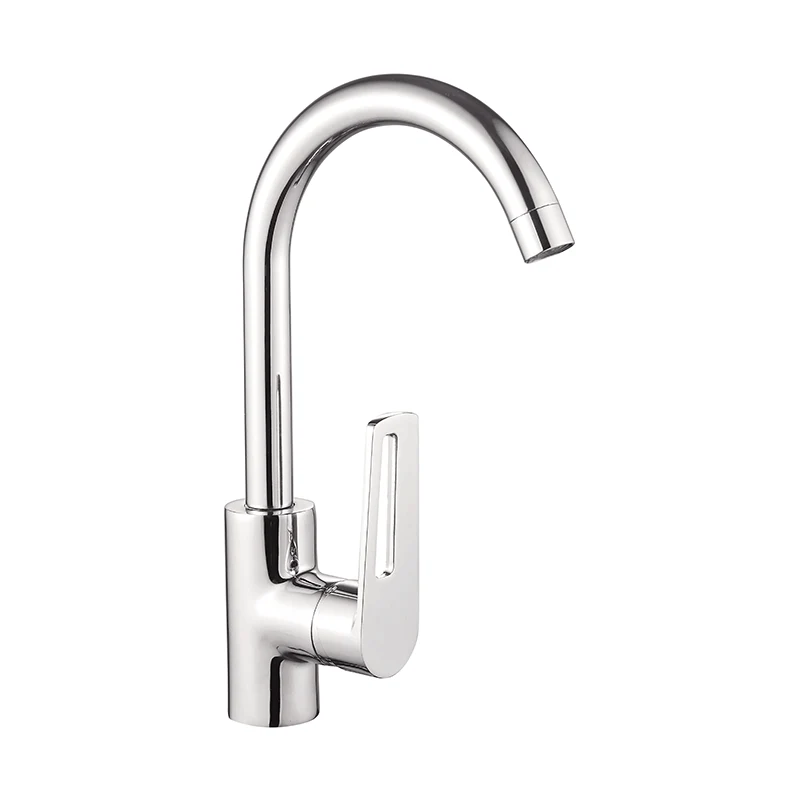
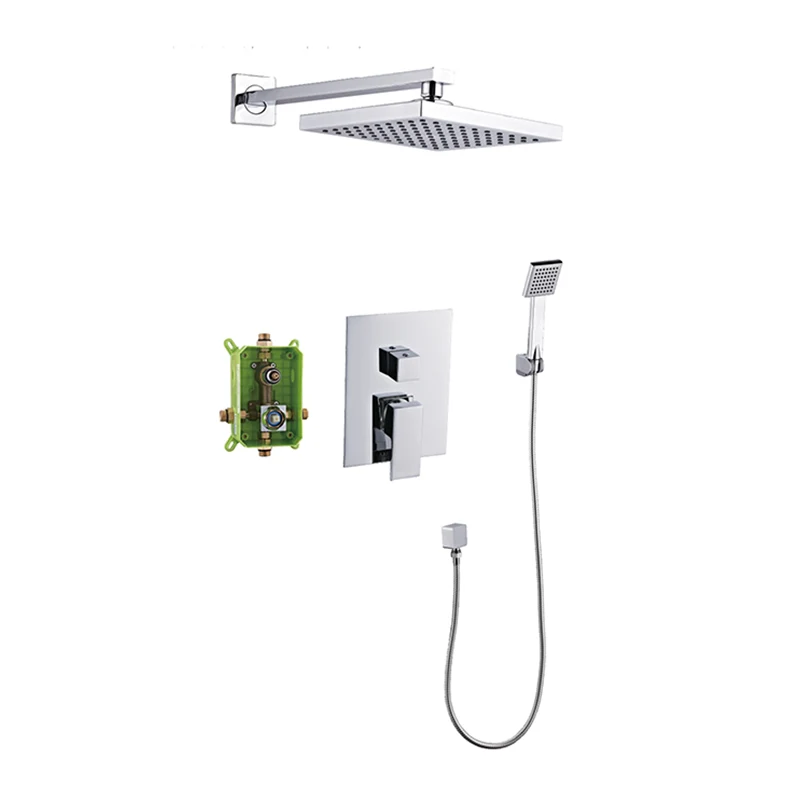
A buyer new to sanitary ware sourcing often assumes that a faucet is a faucet. The assumption is understandable, because both products are chrome-finished, both are operated by a handle, and both deliver water. But a Bathroom Faucet and a shower faucet are engineered for different installation locations, different flow requirements, different valve functions, and different regulatory tests. A basin faucet is designed for intermittent use at a washbasin, with a spout that clears the basin rim and a flow rate that is comfortable for hand washing. A shower faucet is designed for continuous use in a wet area, with a valve that controls temperature and pressure for a shower or a tub spout. If a buyer specifies the wrong product, the result is a return, a failed inspection, or a customer complaint that could have been avoided with a specification review. This article explains the differences in practical procurement terms, so that buyers can select the right product and ask suppliers the right questions.
This guide is written for importers, distributors, project buyers, and private-label teams who source sanitary ware. It covers the installation differences, the flow and valve differences, the material and finish differences, the standards and test differences, and the supplier documentation that should accompany an order. The content is organized around the questions a buyer should ask, and it includes the product parameters and comparison tables that support a confident purchasing decision. Our factory at Taizhou Haogeer Sanitary Wares Co., Ltd. manufactures Bathroom Faucet products for export markets, and the guidance below reflects the specification and documentation practices we apply to the products we supply. The goal is not to add complexity, but to make the difference between the two product categories clear before the purchase order is issued.
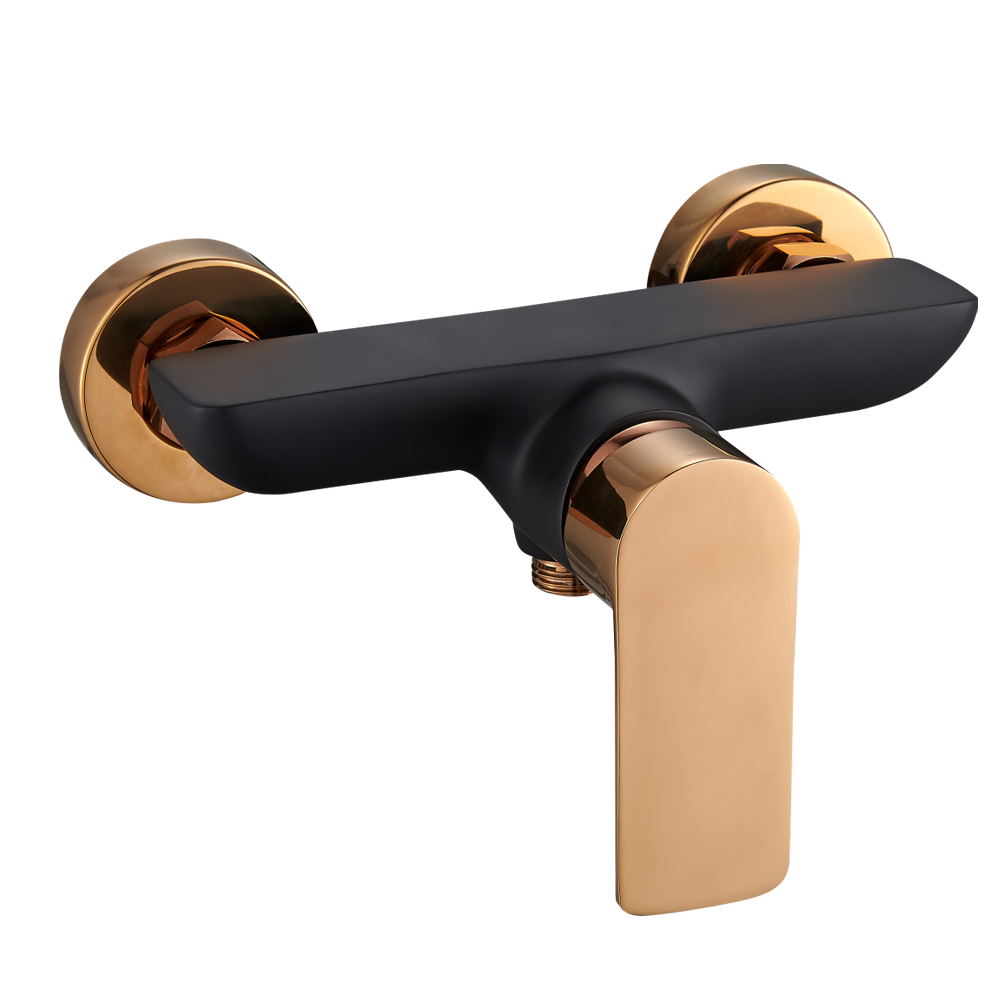
The fundamental difference is the point of use and the function that the product must perform. A Bathroom Faucet is installed at a washbasin, a vanity, or a pedestal sink. Its job is to deliver a controlled stream of water for hand washing, face washing, and oral care. It is operated intermittently, usually for a few seconds at a time, and it must fit the basin's hole configuration, the countertop thickness, and the available space behind the basin. A shower faucet is installed in a shower enclosure or a tub and shower combination. Its job is to deliver water to a showerhead or a tub spout, and it must control temperature and pressure for a continuous flow that lasts several minutes. It is usually wall-mounted, and it must be compatible with the rough-in valve that is installed behind the wall.
The table below compares the two categories at the level of installation and function. This comparison is the basis for the specification differences that follow.
| Comparison Point | Bathroom Faucet | Shower Faucet |
| Primary location | Washbasin, vanity, pedestal sink | Shower wall, tub deck, shower panel |
| Installation type | Deck-mounted or wall-mounted at basin | Wall-mounted or deck-mounted at tub |
| Typical hole configuration | Single hole, three hole, or widespread | Two or three hole rough-in valve |
| Primary function | Intermittent water delivery at low flow | Continuous water delivery at higher flow |
| Valve focus | On and off with temperature mix | Temperature and pressure control |
| Outlet | Spout with aerator | Showerhead, hand shower, or tub spout |
| Typical buyer focus | Spout reach, height, finish, flow rate | Valve type, connection spacing, flow rate |
The distinction matters because the two products are not interchangeable. A basin faucet cannot be used as a shower valve, and a shower valve cannot be installed at a basin without the correct trim and rough-in. A buyer who treats them as one category will order the wrong product or will miss a required component. Our factory at Taizhou Haogeer Sanitary Wares Co., Ltd. separates the two categories in our product development and in our quotation process, so that the buyer receives the correct specification for the intended location. Our engineering team reviews the installation drawing before the order is confirmed, because the installation location determines the product architecture.
For a procurement team, the practical check is to confirm the point of use before the product selection. Ask three questions: Where will the product be installed, what is the required flow rate, and what is the hole or rough-in configuration. The answers will indicate whether the correct product is a basin faucet or a shower faucet. This check takes minutes and prevents a costly mismatch. Our factory at Taizhou Haogeer Sanitary Wares Co., Ltd. provides a specification form that captures these three questions at the quotation stage. The form is not a bureaucratic step. It is the mechanism that ensures the product matches the installation.
Installation location changes the specification because the space around the product, the wall or deck structure, and the user's position relative to the outlet all affect the product's dimensions and connections. A Bathroom Faucet at a vanity must clear the basin rim and reach the center of the basin. The spout height and reach are critical. If the spout is too short, the water hits the back of the basin. If the spout is too low, the user cannot fit their hands under it. The deck thickness and the hole diameter determine the shank length and the mounting hardware. The space behind the basin determines whether a single-hole, three-hole, or widespread configuration will fit.
The following three scenarios illustrate how the installation location changes the specification in practice.
The table below summarizes the installation conditions that should be confirmed before ordering.
| Installation Condition | What to Confirm | Product Impact |
| Basin hole configuration | One hole, three holes, or widespread | Determines faucet body and handle layout |
| Deck thickness | Countertop or basin deck thickness | Determines shank length and mounting hardware |
| Wall rough-in depth | Depth of the valve body in the wall | Determines shower rough-in and trim compatibility |
| Connection spacing | Distance between hot and cold inlets | Determines shower valve body and trim |
| User position | Reach and clearance at the basin or shower | Determines spout reach, height, and handle position |
Our factory at Taizhou Haogeer Sanitary Wares Co., Ltd. provides dimensional drawings for each Bathroom Faucet model, including the spout reach, the spout height, the shank length, and the handle clearance. We also provide the rough-in dimensions for our shower faucet models. Our experience with export projects has shown that dimensional mismatches are one of the most common causes of returns. The drawings are the tool that prevents the mismatch. Our installation guidance is included in the quotation package, so that the buyer can compare the drawing with the site condition before the order is placed.
For a buyer, the installation check should be completed before the supplier is selected. A supplier that can provide dimensional drawings and rough-in data is a supplier that understands the installation. A supplier that provides only a product photo is a supplier that is likely to leave the dimensional risk to the buyer. The specification review is not a technical luxury. It is the step that protects the project schedule and the buyer's margin.
Flow rate, valve type, and finish requirements differ because the two products serve different user behaviors and different regulatory categories. A Bathroom Faucet is used intermittently at a low flow rate, typically 1.2 to 1.5 gallons per minute in WaterSense markets, or 4.5 to 5.7 liters per minute in metric markets. The low flow is comfortable for hand washing and reduces water consumption. A shower faucet is used continuously at a higher flow rate, typically 2.0 to 2.5 gallons per minute, or 7.6 to 9.5 liters per minute. The higher flow is needed for a satisfactory shower and to carry heat to the user. The valve type also differs. A basin faucet uses a mixing cartridge or a ceramic disc cartridge that controls flow and temperature. A shower faucet uses a pressure-balancing valve or a thermostatic valve that maintains a safe outlet temperature when the supply pressure or temperature changes.
The finish requirements differ because the exposure conditions differ. A basin faucet is exposed to soap, toothpaste, and occasional splashes. A shower faucet is exposed to continuous water, steam, and cleaning chemicals. Both products require a corrosion-resistant finish, but the shower faucet's finish must withstand a more aggressive environment. The table below compares the key technical parameters.
| Parameter | Bathroom Faucet | Shower Faucet |
| Typical flow rate | 1.2 to 1.5 gpm, or 4.5 to 5.7 L/min | 2.0 to 2.5 gpm, or 7.6 to 9.5 L/min |
| Valve type | Ceramic disc or mixing cartridge | Pressure-balancing or thermostatic valve |
| Temperature control | Manual mix by handle position | Anti-scald control with temperature limit |
| Outlet | Spout with aerator | Showerhead, hand shower, or tub spout |
| Body material | Brass or zinc alloy | Brass or high-strength engineering plastic |
| Finish exposure | Intermittent splash and cleaning | Continuous water, steam, and cleaning |
| Typical standards | ASME A112.18.1, CSA B125.1, EN 817 | ASME A112.18.1, CSA B125.1, EN 1111 or EN 1112 |
| Key buyer focus | Aerator quality, cartridge life, spout finish | Valve safety, flow stability, thermostatic response |
The valve type is the most important technical difference for safety. A shower faucet with a pressure-balancing valve responds to a pressure drop on the cold side by reducing the hot flow, which prevents a sudden temperature rise. A thermostatic valve goes further and maintains the set temperature within a narrow band. A basin faucet does not need this function because the user is not standing under a continuous flow in a confined space. This is why a buyer cannot substitute a basin faucet for a shower faucet, even if the finish and the handle look similar. The safety function is built into the valve body and the trim.
Our factory at Taizhou Haogeer Sanitary Wares Co., Ltd. tests our Bathroom Faucet products for flow rate, cartridge life, and finish adhesion. We also supply shower faucet models with pressure-balancing and thermostatic valves for projects that require the higher safety level. Our testing program includes endurance cycling, flow calibration, and salt spray testing on the finish. The test data is available to buyers who need it for project approval. The goal is to make the technical difference visible in the documentation, not just in the product description.
For a buyer, the flow rate and valve type should be specified in the purchase order, not left to the supplier's default. The flow rate affects water consumption and user comfort. The valve type affects safety and compliance. The finish affects durability and appearance. A supplier that can provide test data for all three is a supplier that can support the project's technical approval. A supplier that provides only a product photo is a supplier that is not providing the evidence the project needs.
Buyers should check a supplier's product data for completeness, traceability, and relevance to the target market. The product data should include dimensional drawings, material specifications, flow rate and pressure test results, valve endurance data, finish test results, and the applicable standards. The data should be traceable to the production batch and should match the market's regulatory requirements. A supplier that provides a complete data package is a supplier that can support the buyer's technical file and the project's approval process. A supplier that provides only a catalogue page is a supplier that is likely to leave the compliance risk to the buyer.
The following checklist is the minimum data package that a buyer should request before approving a supplier.
The table below summarizes the data package and its purpose.
| Data Item | Purpose | Acceptance Check |
| Dimensional drawing | Confirms installation fit | Matches the site condition and the basin or rough-in |
| Material specification | Confirms durability and compliance | States the grade and the standard |
| Flow and pressure test | Confirms user performance | Meets the target market's flow limit |
| Valve endurance data | Confirms service life | Meets the project's cycle requirement |
| Finish test | Confirms corrosion resistance | Meets the salt spray and adhesion requirement |
| Standards and certifications | Confirms market access | Covers the specific model and market |
Our factory at LEIGEER maintains a product data file for each Bathroom Faucet model we supply. The file includes the dimensional drawing, the material specification, the flow test, the cartridge endurance data, and the finish test report. Our quality system is organized to keep the data traceable to the production batch. Our documentation is prepared for the buyer's technical file, not for internal use only. The goal is to make the supplier approval process efficient for the buyer and the project.
For a buyer, the data review should be completed before the first shipment, not after the first complaint. A supplier that can provide the data package is a supplier that can support the buyer's compliance obligations. A supplier that cannot provide the data package is a supplier that is likely to create a compliance gap. The review is a normal part of procurement, not a sign of distrust. It is the mechanism that makes the supply relationship reliable.
The final selection depends on the project type and the user profile. A residential project with standard basins and a normal shower enclosure can use a standard basin faucet and a pressure-balancing shower faucet. A hotel project with high usage and a focus on guest safety may require a thermostatic shower faucet and a basin faucet with a durable cartridge and a high-quality finish. A commercial project with public restrooms may require a basin faucet with a vandal-resistant aerator and a metering or sensor option. A retrofit project may require a basin faucet that fits the existing three-hole basin without changing the countertop, or a shower faucet that matches the existing rough-in without opening the wall. The table below provides a project matching framework.
| Project Type | Bathroom Faucet Priority | Shower Faucet Priority | Procurement Focus |
| Residential standard | Single or three-hole, durable cartridge, easy cleaning | Pressure-balancing valve, standard flow | Cost, availability, finish match |
| Hotel and hospitality | High-cycle cartridge, premium finish, matching design | Thermostatic valve, anti-scald, high-flow showerhead | Guest safety, maintenance frequency, brand consistency |
| Commercial public restroom | Vandal-resistant aerator, sensor or metering option | Not typically applicable | Durability, water control, low maintenance |
| Retrofit | Matches existing hole configuration and deck thickness | Matches existing rough-in and wall opening | Dimensional compatibility, minimal site work |
The project matching framework is not a substitute for the installation check, but it helps the buyer prioritize the specification. A hotel project that prioritizes guest safety will specify a thermostatic shower valve even if the pressure-balancing valve is cheaper. A retrofit project that prioritizes minimal site work will specify a basin faucet that matches the existing hole configuration even if a different design is preferred. The priority determines the trade-off. Our factory at Taizhou Haogeer Sanitary Wares Co., Ltd. supports project matching by providing product options at different specification levels and by advising on the trade-offs. Our project support team reviews the project type and the installation condition together, so that the recommendation is consistent with the buyer's priorities.
For a buyer, the project matching step should be documented in the purchase order. The order should state the project type, the installation condition, the flow rate, the valve type, and the finish requirement. This documentation becomes the reference for the supplier's production and the buyer's inspection. The documentation also becomes the basis for any future replacement order, which reduces the risk of a specification drift over time.
The final decision should also consider the supplier's ability to supply both categories from one source. A single supplier for the basin faucet and the shower faucet simplifies the logistics, the finish matching, and the documentation. A supplier that manufactures both categories can ensure that the finish and the design language are consistent across the bathroom. Our factory at Taizhou Haogeer Sanitary Wares Co., Ltd. supplies both product categories and coordinates the finish and the packaging across the order. The goal is to make the bathroom project coherent, not just to fill two separate purchase orders.
Question 1: Can a bathroom faucet be used as a shower faucet?
Answer: No. A basin faucet is designed for intermittent use at a washbasin, and it does not include the pressure-balancing or thermostatic valve that a shower requires for anti-scald protection. Using a basin faucet in a shower would create a safety risk and would not meet the plumbing code requirements for a shower valve. The two products have different valve bodies and different installation interfaces.
Question 2: What is the typical flow rate difference between the two products?
Answer: A bathroom faucet typically flows at 1.2 to 1.5 gallons per minute, or 4.5 to 5.7 liters per minute, in markets with water-efficiency requirements. A shower faucet typically flows at 2.0 to 2.5 gallons per minute, or 7.6 to 9.5 liters per minute. The higher shower flow is needed for a satisfactory shower and for temperature stability. The exact limit depends on the target market's regulation.
Question 3: What valve type should a shower faucet have for a hotel project?
Answer: A hotel project usually specifies a thermostatic shower valve because it maintains the set temperature within a narrow band and provides anti-scald protection. A pressure-balancing valve is also acceptable in many markets, but the thermostatic valve offers a higher level of guest safety and comfort. The choice depends on the project's safety policy and the local code.
Question 4: What dimensional data should I check before ordering a bathroom faucet?
Answer: Check the spout reach, the spout height, the shank length, the handle clearance, and the hole configuration. The spout reach must clear the basin rim and reach the center of the basin. The shank length must accommodate the countertop thickness. The hole configuration must match the basin. A dimensional drawing from the supplier is the best way to confirm the fit before the order is placed.
Question 5: What product data should a supplier provide for project approval?
Answer: The supplier should provide a dimensional drawing, a material specification, flow and pressure test results, valve endurance data, finish test results, and the applicable standards and certifications. The data should be traceable to the specific model and production batch. A complete data package supports the buyer's technical file and the project's approval process.
The difference between a Bathroom Faucet and a shower faucet is not cosmetic. It is a difference in installation location, flow requirement, valve function, safety feature, finish exposure, and regulatory standard. A buyer who understands these differences can specify the right product, avoid returns, and protect the project's reputation. A buyer who treats the two categories as interchangeable will eventually face a dimensional mismatch or a safety compliance issue. The specification review, the dimensional drawing, the valve data, and the project matching framework described in this article are the tools that make the difference manageable. Our factory at Taizhou Haogeer Sanitary Wares Co., Ltd. supplies both product categories and supports buyers with the drawings, test data, and project guidance needed to make the right choice. If you are sourcing sanitary ware for a residential, hospitality, or commercial project, contact our team to discuss the installation conditions and the performance requirements before the order is placed.
Contact Taizhou Haogeer Sanitary Wares Co., Ltd. today to request the dimensional drawings and test data for our bathroom faucet and shower faucet ranges, and to discuss the specification that fits your project.
-